

The problem with birth plans
The line between preparation and trying to protect ourselves from unpredictability is thinner than we think.

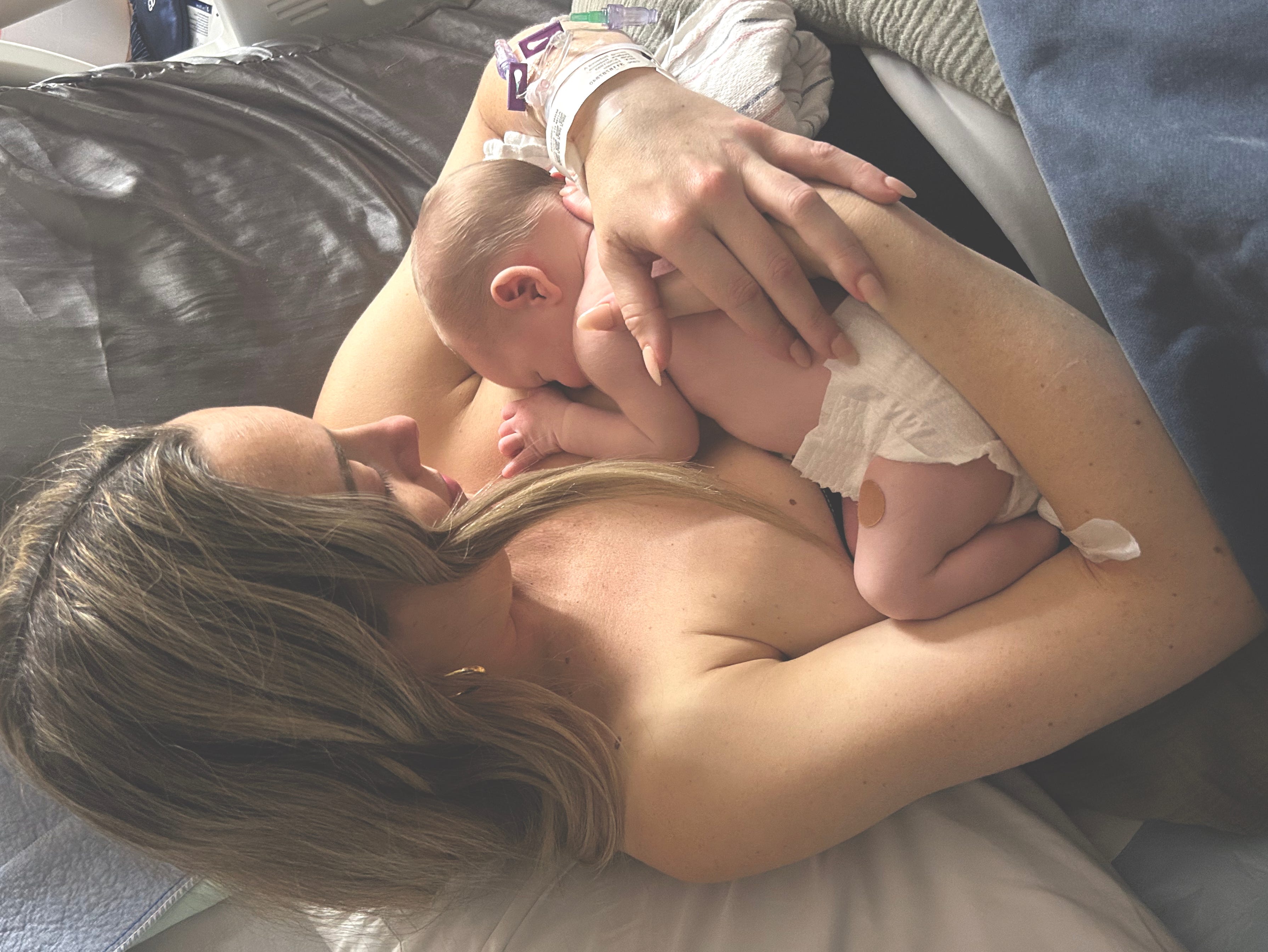
My birth plan was, in a word—thorough. Or so I thought, at least.
I spent months crafting this document. I thought I covered everything—from my preferred birthing positions, to how long doctors should wait before cutting the cord, and even what kind of breathing I planned to practice during the pushing stage. As I submitted the final draft in the weeks leading up to my due date, I’ll admit I teetered between self-assured and smug. Armed with this birth plan, I was surely guaranteed my dream birth.
Blame it on my wildly unstable childhood, but control is something I have always grasped for—eagerly, desperately, as if my life depends on it. Needless to say, the innate unpredictability of childbirth presented quite a terrifying notion. The one thing I found solace in? My birth plan.
As it turned out, though, my birth plan provided a dangerous kind of comfort—because it was all a mirage.
Worse yet, it represented an idealized version of childbirth I wouldn’t ultimately live up to—sending me into a spiral of disappointment and shame.
The grief of unmet expectations
By the time I went into labor on August 26th, 2025, I had already spent roughly seven months imagining what my son’s birth would be like. That’s 212 days of mental rehearsals. I’d even begun to feel the outlines of future emotions—like a highly detailed sketch that just hadn’t been filled in yet. The weight of his head against my bare chest. Still covered in waxy vernix. Our breathing steadily aligning in sync. Unbridled tears of joy mixed with relief.
I hadn’t considered an alternate story: One where the baby passed meconium before birth. Labor stalled. His heart rate dropped with every contraction. The epidural didn’t work. My blood pressure spiked. Liver and kidney enzymes were elevated. The doctor and nurse exchanged uneasy glances. He was whisked away to the NICU before we could properly bond.
There’s a moment I keep coming back to. I was lightheaded from repeatedly pushing, my legs trembling from holding them in acrobatic yoga positions. The doctor asked whether I’d be OK with using a vacuum to help get the baby out.
“What are the risks?” I asked—in a very on-brand moment of calculation despite the chaos.
He rattled off something about scalp swelling, bleeding inside the skull, fractures, nerve damage. My brain went blank. I was facing a possibility that had never crossed my mind—a choice I wasn’t prepared to make. This wasn’t in the books I read. This wasn’t part of the plan.
When I returned home from the hospital, I found myself wrestling with a tangled mess of emotions: grateful, of course, that my son had ultimately made it into the world safely—but also feeling robbed of the birth story I thought I was owed. Was it something I did? Or didn’t do? What use was my birth plan when it got completely derailed?
Apparently I’m not alone.
Erica Livingston, a doula and maternal health educator who co-facilitates a program called HEAL for people processing difficult birth experiences, says many parents arrive feeling blindsided not because they didn’t prepare—but because they prepared so intensely.
“One of the biggest griefs I witness is that many of the people there did not walk into birth blindly,” she explains. “They hired doulas. They took classes. They made thoughtful birth plans. They researched interventions and talked extensively with their providers. Many truly believed they had prepared for the full adventure of birth, and then things still went sideways.”
That disconnect often creates what Livingston describes as a uniquely painful emotional narrative: Why couldn’t I plan myself into a good birth? Why did this still happen to me?
Perinatal therapist Kara Kushnir, LCSW, PMH-C, says birth plans can sometimes become psychologically loaded—particularly for anxious or perfectionistic people who unconsciously use preparation as a form of control.
Kushnir adds that the emotional fallout can run even deeper for people who carry unresolved trauma into pregnancy and birth.
When did birth become a performance?
The problem isn’t with birth plans in and of themselves.
It’s with the meaning we attach to them—and the rigidity we treat them with.
Unknowingly, my preferences had quietly hardened into expectations—and then those expectations became entangled with my sense of competence, self-worth, and maternal identity.
I partly blame the fact modern culture often presents childbirth as something that can be optimized—and social media certainly plays a role in driving this narrative.
“I went into my own birth only seeing positive births through social media,” says Olivia Pham, a licensed therapist certified in perinatal mental health. “So when my birth didn’t end up in a picture-perfect Instagram-ready way, I already felt like a failure.”
Jana Rundle, a licensed clinical psychologist and certified perinatal mental health specialist with Bloom Psychology, sees this dynamic often in her own work with mothers.
“Social media can unintentionally create moral pressure around birth choices,” she explains. “Women can start to feel like there’s a ‘right’ or ‘best’ way to give birth—instead of recognizing that every pregnancy, baby, and body is different.”
“There’s no wrong birth plan,” Rundle adds. “But I do see more emotional distress when someone becomes rigidly attached to what birth ‘should’ look like.”
Kushnir believes the language embedded within modern obstetric care can reinforce those feelings.
“The word ‘failure’ has no place in birth, and yet it’s everywhere,” she says. “‘Failed induction.’ ‘Failure to progress.’ ‘Failed VBAC.’ I hear this language from clients all the time.”
And when someone already feels vulnerable, those words linger long after they’ve been logged in the medical chart.
“When someone walks away with a narrative of personal failure, that story follows them into early parenthood, into how they see themselves as a caregiver, into their attachment with their baby, and every conversation about their birth story thereafter,” adds Kushnir.
In the days and weeks following my son’s birth, I scrolled past countless posts depicting childbirth in a way that felt so foreign from my experience—calm, candlelit hospital rooms; an empowering final push in a bath tub; a primal scream tinged with unexpected ecstasy; a blissful skin-to-skin moment.
Two things can be true. I felt happy for people who had these kinds of birth stories. I also felt trapped in a suffocating loop of comparison, jealousy, and self-pity.
Moreover, I couldn’t accept that my traumatic birth was out of my control. So, instead, I internalized it—assuming that somehow, I must be to blame for things going awry.
And even more agonizing than the feeling of inadequacy was the fear that somehow, my inability to execute my birth plan had shaped my son’s entry into the world.
I worried the chaos of labor had imprinted on him somehow—that the stress, interventions, panic, and uncertainty had already altered his nervous system before I had a chance to hold him in my arms. I worried about bonding with him. Whether he felt safe. Whether I had already failed to protect him in some irreversible way.
Because if the birth wasn’t random—if it was somehow the result of my own shortcomings—then at least it was explainable. Containable. Mine to carry.
The difference between preferences and expectations
The term “birth plan” may be part of the problem. It suggests something deeply misleading: that childbirth can actually be mapped out in advance.
In reality, birth is fickle business. Messy. Humbling. Not unlike parenting itself, actually.
I wish someone had framed it differently for me.
“Birth preferences” feels more honest.
Because there’s absolutely nothing wrong with having opinions about how you’d ideally like labor to unfold. But weaving your identity too tightly into a specific outcome? That’s setting yourself up for suffering.
“Informed preferences are healthy and can help women feel prepared and empowered,” says Rundle. “The challenge comes when a specific outcome starts carrying emotional value or becoming tied to identity or worth.”
Livingston still believes birth plans are incredibly valuable—but perhaps not for the reasons many people think.
“What I often tell clients is that the real value of birth planning is not creating a perfect script for birth,” she says. “It’s the education that happens while making the plan.”
For example, Livingston says someone researching whether they want an intervention like artificial rupture of membranes may begin asking deeper questions like: Why does this matter to me? What are the risks and benefits? If plans change, what would help me feel supported, and equipped to make a decision?
“That kind of planning creates flexibility through understanding rather than rigidity through control,” Livingston says.
Kushnir similarly encourages clients to think not only about their ideal birth scenario—but about their “pivot plans and preferences” if labor changes direction.
For example: If a vaginal delivery becomes a C-section, how would they ideally like providers to communicate with them? What would help them still feel included in the decision-making process? What kind of support person helps them feel safest?
“We can empower parents to pause and ask questions in birth as part of their plan so they can actually collaborate on their care rather than feel like a bystander to their own birth,” Kushnir explains.
I’d spent so much time planning what I wanted during birth that I never really considered how I wanted to feel if things went differently. Those things mattered more than I realized.
The goal was never perfection
If I’ve learned anything in my conversations with experts, it’s that birth trauma is rarely determined solely by the type of birth someone has.
It’s equally possible to have a traumatic vaginal birth as it is to have a deeply empowering C-section.
“So much of that difference comes down to informed consent, communication, preparation, support, and whether someone felt respected and included in decision making throughout the process,” Livingston says.
Pham agrees. She says emotional resilience during labor often has less to do with achieving a perfect birth—and more to do with feeling mentally prepared for the many possible ways birth can unfold, as well as having providers who validate your experience.
According to experts, that support becomes even more important in the fragile fourth trimester—when many new parents are simultaneously healing physically, navigating sleep deprivation, and adjusting to one of the biggest identity shifts of their lives.
“I would especially love to speak to the psychological impact of failure narratives around birth and how deeply vulnerable the postpartum period already is,” Livingston says. “Many people don’t feel there are spaces where they can safely unfold those feelings without judgment.”
To be clear, if I ever give birth again, I’ll still make a birth plan. That instinct—to research, prepare, and soften the harsh edges on uncertainty—is ingrained in me.
But this time, I think I’d leave more room for the unknown. Focus on the things that I can control—like the mood I want to evoke, and emotions I want to channel.
Not because birth plans are pointless, but because birth is not a performance. There’s no trophy for vaginal delivery, or unmedicated labor. No moral superiority in avoiding interventions. No failure in changing course. No “right” way to bring a baby into this world.
Before, I thought the goal was control.
Now I think the goal is surrendering the illusion of it.
Thanks Rebeca, that was beautiful. As Mike Tyson said "Everybody has a plan until they get punched in the face."
As a man I will never have the opportunity to give birth, regardless of what certain sectors of society say. That said I took a real interest in the birth of my first child (not so much the second) and the developmental stages of the fetus. I read "What to Expect When You're Expecting" and other books, went to every consultation with my wife, and I as a father had my own expectations of what would happen that all went out the window as well. I won't go into it but appreciate you doing so. Thanks again.
Beautiful Bex 🩵🫂